N.B. (An abbreviation for the Latin phrase Nota Bene meaning “note well”)
To give some notice to those I nominate for each weeks Chair there has been a suggestion made. This will be discussed at one of our Meetings but here is my suggestion. I publish a list of five people, the Chair for this week (Chair), the Chair for the next week (Future Chair 1), the Chair for the following week (Future Chair 2). Etcetera and so on up to Future Chair 4. This will give the nominees a chance to prepare and, if the Chair for the week doesn’t turn up (quelle horreur!!) we will have a backup. Think about it and discuss at the Meeting.
Happenings at last week's Meeting
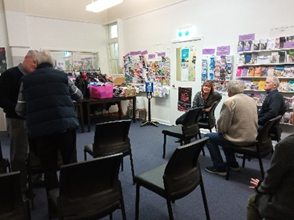
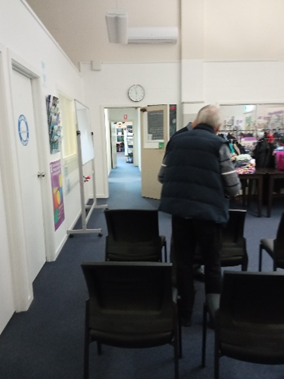
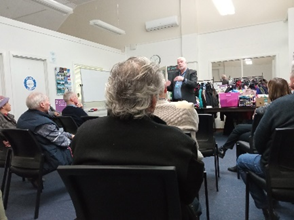
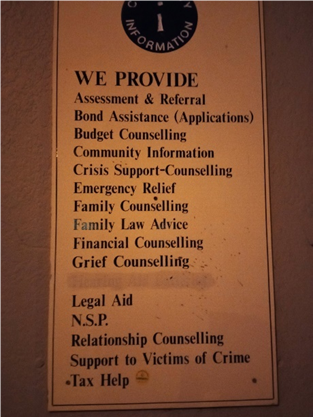
This week the Meeting was held at the Southern Peninsular Community Information Centre where we were shown the facilities and given a run-down on the scope of the work that the Centre undertakes. We were welcomed by Belinda Rodman (Pres. Fundraising) and Jeremy Maxwell (CEO) and seated in the main reception area of a building which they both identified as “a bit of a rabbit warren”.
Jeremy then ran us through the "what and how" of the Centres work:
- SPCIC is an emergency relief charity, i.e. one that helps people in crisis, not just with food or emergency aid;
- They have trained councillors who undertake a 50 hour course and 20 hours of mentoring. They are all volunteers;
- The Centre caters for, and provides services, to individuals and families;
- Clients/Families will have a case worker assigned for particularly complex problems, to help them navigate the “system”;
- Funding is a mixture of donations and government support, although the government support fails to keep up with inflation;
- The Centre runs various Programs such as SPLASH (Southern Peninsular Laundry And Shower), general help to rough sleepers and outreach to those who “distrust the system”. They have over 1000 clients with about one third being rough sleepers;
- With donations and discounts they have managed to turn $188K into the equivalent of $800+ as well as participating in the Food 4 All program to which all churches on the Peninsular contribute;
- They advise people/families in crisis to pay their rent first and then seek their help. Many people who are new to a crisis situation are very reluctant and embarrassed to approach the Centre. This has resulted cases of severe hardship and even malnutrition;
- Food systems have been developed to support people’s health as the quality of food is the first casualty of a crisis;
- Food recovery organisations such as 2nd Bite and Aus. Harvest do provide food which is quickly sorted and equitably distributed due to it’s age;
- The Centre has a weekly distribution of fresh food;
- Rough sleepers have special needs when it comes to food, both in convenience and quality. Some of this comes from Foodbank but mostly it is purchased by the Centre;
- There are bags of food supplied to SPLASH attendees; and
- Frozen meals are not often delivered from where they are produced in Melbourne so, recently, the Cape Schank Resort has undertaken to supply frozen meals.
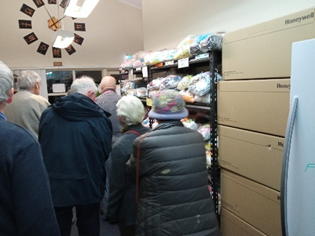
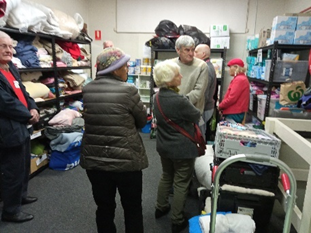
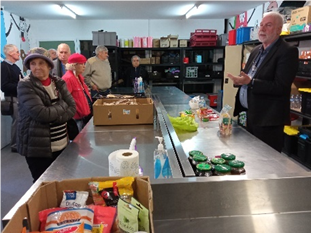
While discussing the food provided by the Centre, Jeremy took the Members through to the food collection and distribution parts of the complex. He then spoke on the particular problems that are faced by the Centre:
- Funding is 40% from Governments (Shire and Federal) with a one off contribution from the State;
- 60% of funding is from donations and private support which is the only area which is expanding.
- SPCIC is the “last in the line” when it comes to crisis support on the Peninsular;
- The Peninsular homeless are an older demographic with the younger ones up in Melbourne;
- 30% of public housing on the Peninsular is not being used. The excuses for this range from “needing maintenance” through to being “lost”;
- The governments like to release major maintenance contracts so it is feasible that Peninsular properties do get lost in the crowed;
- Why not go back to “micro” contracts where the Shire partners with local organisations to look after properties? and
- It is important to get the message out that this problem could be fixed.
The problem of the homeless, and those in crisis, is a problem not just for organisations such as SPCIC but for the whole community. Would the micro partnerships model work? Jeremy asked that we all think about it.
The Centre conducts an introductory talk each Tuesday at 9:30. Anyone wanting to attend should book.
As a final point Jeremy and Belinda pointed out that the Centre also accepted:
- Any excess food produced in private gardens;
- Coats and toiletries; and
- Pet needs such as food etc.
President Mick thanked Belinda and Jeremy for their very informative talk and for taking the time.
The Meeting closed at 7:40.
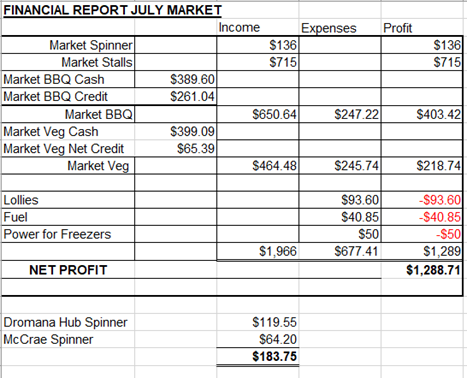
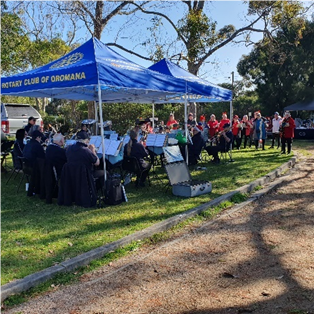
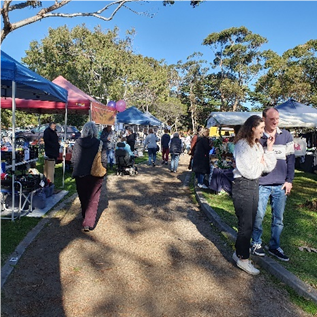
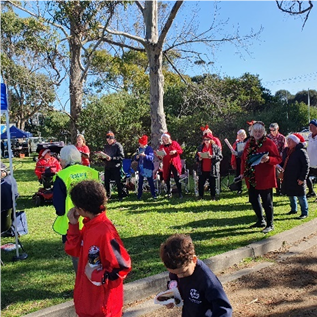
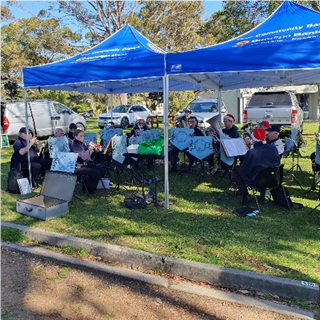
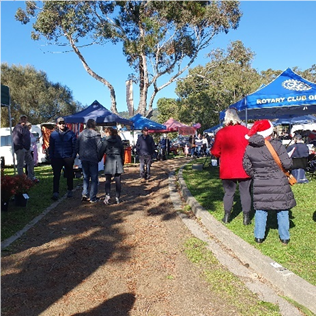
The Xmas In July Market